hello @colerose how do u get all these topics by launching just roslaunch voxl_mpa_to_ros voxl_mpa_to_ros.launch because when i launch it i get just these topics :
MPA to ROS app is now running
Found new interface: hires
Found new interface: qvio_overlay
Found new interface: stereo
Found new interface: tracking
Found new interface: imu0
Found new interface: imu1
Found new interface: voa_pc_out
Found new interface: qvio
Thank u in advance for your reply
Those are the specs from the vendor, we don't have any more information, sorry. The intensity image is published in MPA so you could perform a calibration on it to find out more details.
@Chad-Sweet how many ekf_imu instances would you suggest running on a VOXL-FLIGHT in general, considering a decent workload already on the VOXL -part?
cheers
Camera server has auto-exposure enabled by default on all the cameras, you can verify this by looking at /etc/modalai/voxl-camera-server.conf and by running voxl-inspect-cam hires_preview and shading the lens with your hand, watching the exposure go up and down.
We got it to work by just navigating to the launch file and invoking the roslaunch command from there (and excluding the package name): roslaunch voxl_mpa_to_ros.launch. Thanks, @Alex-Gardner!
@colerose we selected mobilenetv2 because of its exceptional performance on embedded devices - currently, inference time in the voxl-tflite-server is ~22ms per frame with very high precision. Also, the mobilenet family is fairly easy to retrain with a custom dataset!
Hey @colerose,
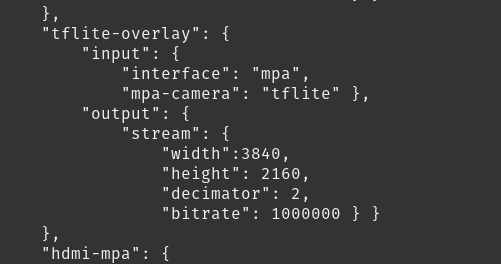
What was the voxl-streamer output when you tried to start the second stream? I was able to successfully start a stream with both the hires and tflite-overlay cameras, however voxl-streamer is very resource intensive when we have multiple streams running. Have you considered using voxl-portal to view both?
[image: 1631730040501-dual_camera_streams.png]
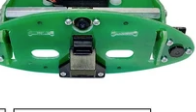
We don't sell any platforms with the M0024 sensor onboard by default. If you're just trying to use it for color fpv/more general inspection I'd suggest just VHB taping it to the front, if you're trying to use it for hyper-accurate detections you'll have to modify one of our platforms or design your own (as most of our platforms are meant to serve as reference designs and not full production hardware).
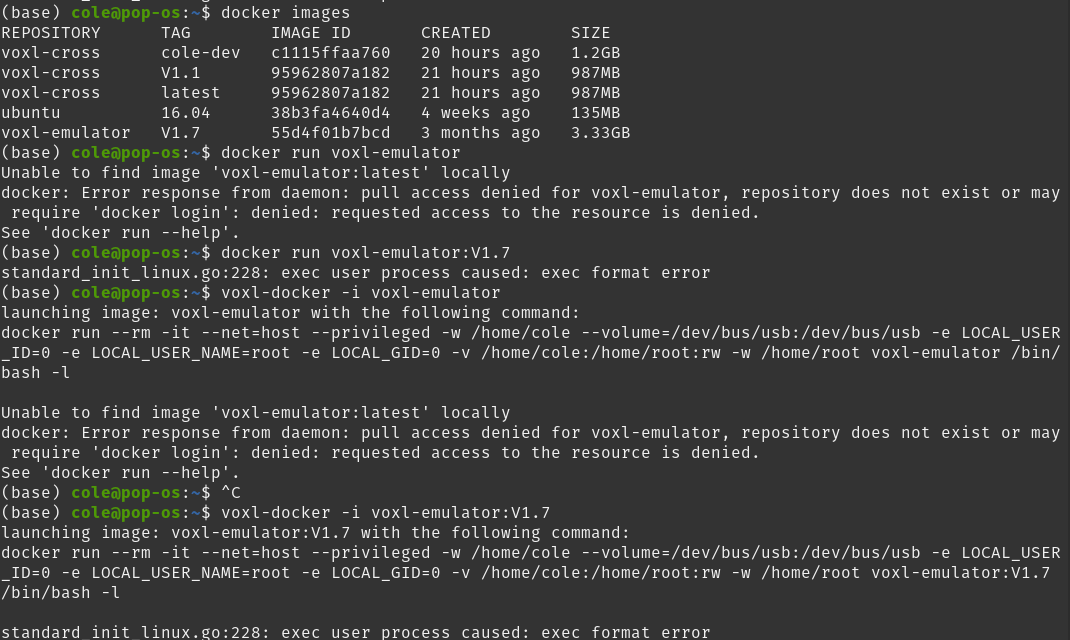
It looks like your machine does not have QEMU support or is missing ARM support on your host machine. Please try instructions here : https://www.stereolabs.com/docs/docker/building-arm-container-on-x86/ (which also show you how to run ARM64 docker images on x86)
Hey @colerose,
Glad to hear you got it working, and I apologize for the typos in my code snippets. I do not know of any way to send coordinates over rtsp, but if you are willing to work in c++, you are able to access that data directly in the voxl-tflite-server.