Starling 2 Max back-right motor clicking and reduced RPM — suspected magnet delamination
-
Hi ModalAI team,
Sales recommended that I post this issue here for technical review.
We identified a mechanical fault in the back-right motor of our ModalAI Starling 2 Max, mapped to ESC ID 3. The motor produces a repeatable clicking/rubbing sound during rotation, and visual inspection appears to show a displaced or delaminated internal magnet.
We have removed the aircraft from flight testing and are requesting guidance regarding motor replacement or RMA.
System details
- Aircraft: ModalAI Starling 2 Max
- Compute/autopilot: VOXL 2 / QRB5165
- ESC: ModalAI 4-in-1 ESC, M0129-6, board version 44
- ESC firmware: 39.25
voxl-px4: 1.14.0-2.0.138voxl-esc: 1.6.2- VOXL ESC tools binary: 1.10
- Affected motor: back-right
- Mapped ESC ID: 3
Mechanical observation
The back-right motor clicks or rubs at a repeatable point during rotation. The clicking became more pronounced during the first powered low-power test, so we stopped testing the suspect motor after that point.
The suspect motor and a known-good motor both measured approximately 0.5 ohm phase resistance. We understand that matching winding resistance does not rule out a mechanical or magnetic fault.
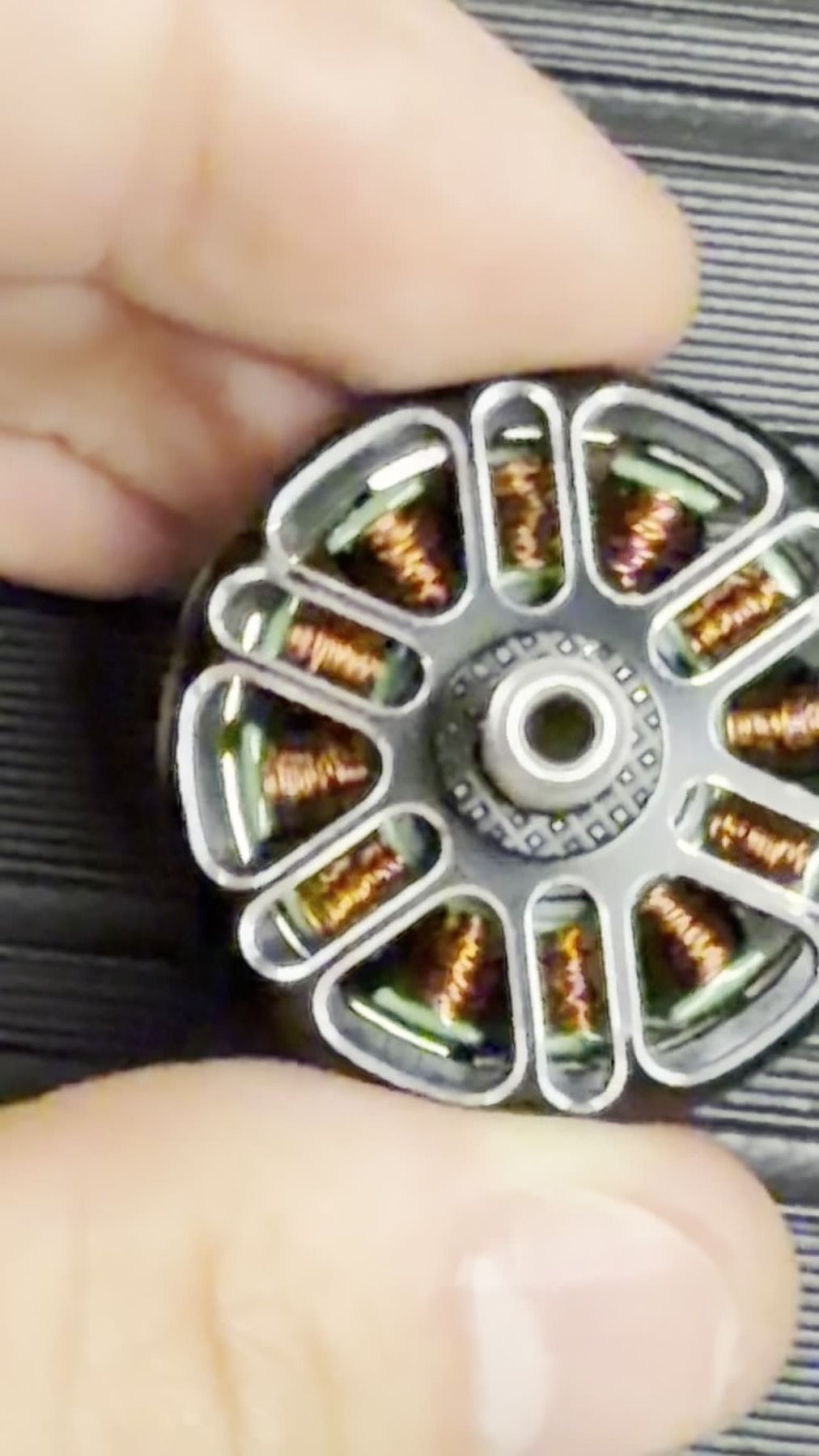
Close-up of the suspect back-right motor.
Props-off low-power comparison
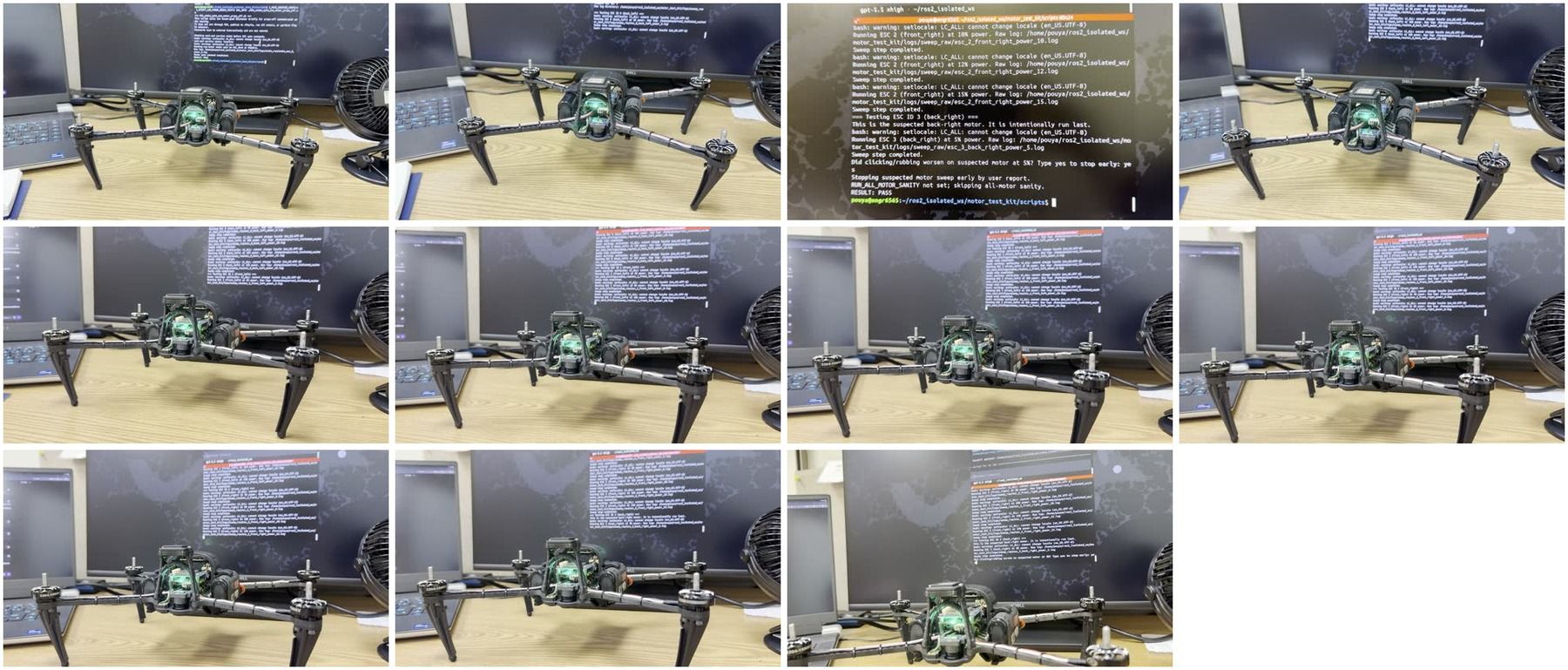
This was not an ESC calibration or a thrust test. It was only a comparative motor-health check with:
- all propellers removed,
- the aircraft secured,
voxl-px4stopped,- each motor tested individually,
- and the same initial low-power command applied to each motor.
Motor position ESC ID Average RPM at first valid low-power point Back-left 0 1699.79 RPM Front-left 1 1770.04 RPM Front-right 2 1755.47 RPM Back-right — suspect 3 1482.49 RPM The good-motor median was approximately 1755.47 RPM. The back-right motor was therefore approximately 15.6% below the good-motor median at the same command.
The raw test log also records that the clicking worsened during this test, so we did not continue with higher-power points on the suspect motor. The other three motors completed additional low-power sweep points without the same mechanical symptom.
Image 2 — close-up frame sequence
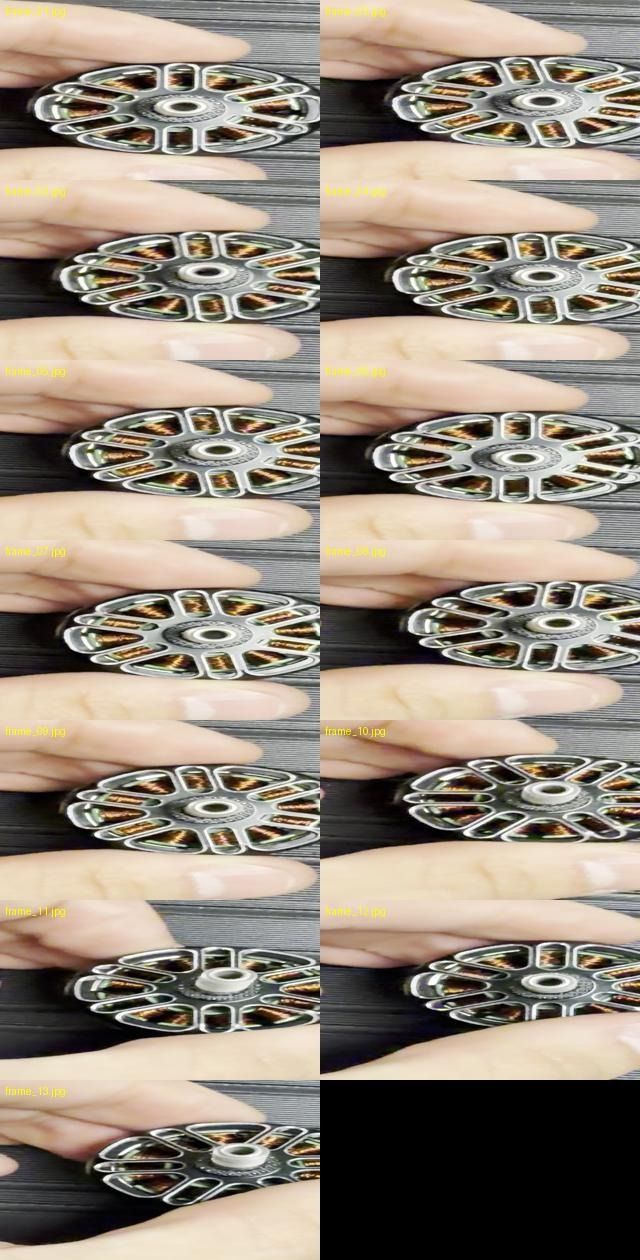
Image 3 — props-off bench-test setup
Current assessment
At this point, we do not consider the back-right motor safe to fly.
The conclusion is based on the combination of:
- repeatable mechanical clicking/rubbing,
- apparent magnet displacement or delamination,
- reduced RPM at the same command,
- and worsening clicking during the powered test.
We plan to replace the motor before conducting any further hover testing.
Questions
Could the ModalAI team please advise:
- Does this appear consistent with a delaminated motor magnet or another internal rotor fault?
- Would you recommend replacing only the motor, or should we also inspect or test the ESC channel, wiring, and motor mount?
- Is this appropriate for a replacement or RMA request?
- Is there a specific low-power validation procedure you recommend after installing the replacement motor?
- Would the raw VOXL ESC logs, mapping CSV, and full sweep data be useful for your review?
Supporting material
Attached or available:
- close-up video showing the clicking/rubbing,
- powered props-off bench-test video,
- close-up still images,
- ESC-to-motor mapping,
- raw VOXL ESC logs,
- comparison CSV,
- and a PDF engineering evidence report.
Thank you for reviewing this. We can upload any additional logs or hardware information that would help with the diagnosis.
